Signed in as:
filler@godaddy.com

I created a Tableau storyboard detailing the results of an analysis of the association between experiences with sexual violence and suicidal thoughts and plans. All data used came from the 2017 Youth Risk Behavior Surveillance System by the Centers for Disease Control and Prevention. The image above shows the demographic characteristics of the dataset used, broken down by sex, race/ethnicity, age, and sexual orientation.

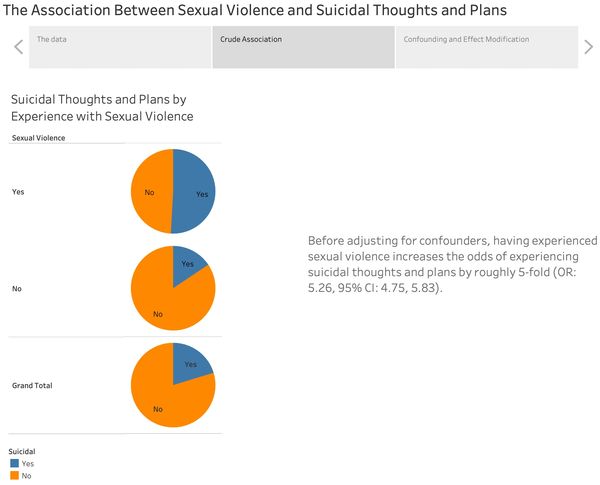
The crude association between experiences with sexual violence and experiences with suicidal thoughts and plans is shown in the Tableau storyboard image above.


The graphic above demonstrates the effect modification of sexual identity on the association between having experienced sexual violence and having experienced suicidal thoughts and plans. Overall, there was a higher prevalence of suicidal thoughts and plan among sexual minority youth. Those who were unsure of their sexual orientation had the strongest association between sexual violence and suicidal thoughts and plans. This data shows correlation only and cannot speak to causation. If a causal relationship exists, the direction cannot be predicted from this data alone.

Table 3 above shows the adjusted associations between sexual violence and suicidal thoughts and plans in youth surveyed by the YRBSS in 2017. These associations are additionally adjusted for race/ethnicity and alcohol consumption, the analysis for which was done by fellow students.

I created an interactive dashboard using Tableau. By selecting from the drop down menus on the righthand side, one can change the display to show the prevalence of suicidal thoughts and behavior in youth with different demographic features.